As an Amazon Associate, we earn from qualifying purchases with no additional costs for you.
Knife steel debates can get heated fast. One person swears by D2 like it’s forged by the gods, while another won’t touch anything that isn’t CPM-something-or-other. Meanwhile, you’re just trying to figure out if your budget folder will survive a weekend camping trip.
Knife steel isn’t all about prestige. Performance depends on use, heat treatment, and design. There is a lot of online opinion around AUS-8, D2, and 8Cr13MoV, but the key is to choose steel that fits your real-world needs, not internet myths.
The fact of the matter is that steel choice matters… but not always the way people think. Lets cut through the hype, myths, and marketing fluff to break down what really makes a knife steel “good.” We’ll explore common steels like AUS-8, D2, and 8Cr13MoV, talk about the magic (and mystery) of heat treatment, and explain why sometimes the less popular steel is the right call. Whether you’re a collector, EDC junkie, or just steel-curious, it’s time to clear the air.
The Obsession with Steel Types

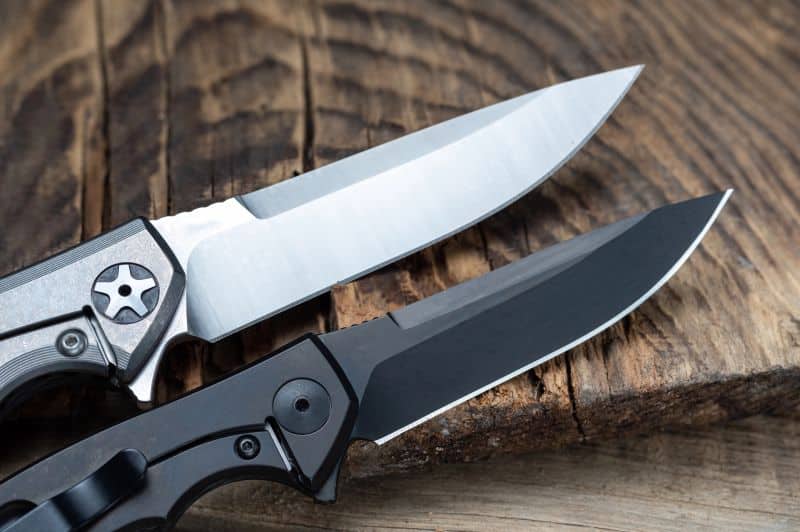
There’s something about knife steel that triggers full-blown controversy. Scroll through any knife forum or Reddit thread, and you’ll see arguments about edge retention, toughness charts, and which steel “wins” the battle. Everyone has an opinion!
We get it. Steel is important. But the obsession with finding the ultimate steel often leads to tunnel vision. A steel’s name becomes a badge of honor, and suddenly, a knife’s actual design, ergonomics, or intended use gets overshadowed by three or four letters stamped on the blade.
Knife manufacturers don’t exactly help. They know steel sells, and they’re more than happy to slap a “premium” label on anything powder metallurgy-related, even when the rest of the knife is average at best. The result is a lot of people equate price or hype with performance, which isn’t always the case.
We’ve seen perfectly good blades made from humble steels outperform “super steels” simply because they were well-designed and well heat-treated. If you’ve ever used a $30 beater knife that outworked a $200 folder, you know what we’re talking about.
TIP: Japanese steels are in a class of their own. If you are interested in Japanese kitchen knives, you need to read this article on the knife steels used to craft these gems.
Japanese Knives Steel Types
Does “Better” Steel Always Mean Better Performance?
The short answer is, not necessarily.
Just because a steel has higher numbers on a spec sheet doesn’t mean it’ll actually perform better in your hands. A lot of the “better” steels people brag about, like S90V or M390, are impressive in lab tests. They have crazy edge retention and fine-grain structures, but there’s a trade-off: they’re often harder to sharpen, more brittle, and overkill for everyday tasks.
Let’s be real; are you slicing cardboard and opening mail, or are you batoning through hardwood and skinning elk every weekend?
Steel like VG-10, 14C28N, or good old 1095 may not get the internet drooling, but they’re workhorses. They sharpen easily, perform reliably, and in many cases, hold up better in field use than their flashier cousins. A well-treated AUS-8 can outperform a poorly heat-treated D2 every single time.
What matters more than just the steel label is how it’s used, how it’s heat-treated (we’ll get to that), and whether it fits your needs.
AUS-8 vs. D2 vs. 8Cr13MoV: A Realistic Breakdown
Let’s cut through the noise and look at three of the most talked-about and misunderstood knife steels: AUS-8, D2, and 8Cr13MoV. These are the usual suspects in budget to mid-range knives, and they each have their quirks.
AUS-8
Often underrated, AUS-8 is a Japanese stainless steel that strikes a solid balance between corrosion resistance, ease of sharpening, and decent edge retention. It’s not the hardest steel on the block, but that’s kind of the point, it’s forgiving.
You’ll find AUS-8 on a lot of EDC and tactical-style blades because it’s reliable and easy to maintain, even in the field. And when it’s heat-treated well, it punches way above its weight.
D2
D2 is the “semi-stainless” tool steel that people either love or love to hate. It’s got better edge retention than AUS-8 and 8Cr13MoV, but it’s not truly stainless, which means it can rust if you’re not careful.
It’s also more difficult to sharpen once it gets dull. That said, when properly heat-treated, D2 can be a beast for hard-use tasks. Just don’t expect it to be low-maintenance.
(For more on D2’s quirks and care, check out our guide to keeping your knife rust-free in wet environments.)
8Cr13MoV
This is the steel that gets dumped on most often, but unfairly so. 8Cr13MoV is basically the Chinese cousin to AUS-8. It is similar chemistry, similar performance, and often a lot cheaper.
Is it a “super steel”? Not even close. But for budget blades like the Kershaw Cryo (Amazon link), it works just fine. With proper heat treatment, it’s more than capable for daily tasks.
The key is that none of these steels are “bad.” They just have different strengths. The trick is matching the steel to your needs, not your ego.
TIP: Find out my TOP 3 picks of pocket knives if you are interested in buying a pocket knife (Amazon link):
- Victorinox Swiss Army Rangergrip knife: Our favorite feature is the one-hand-opening lock blade, a crucial feature of this tool.
- Opinel No.8 Carbon Pocket Knife: Robust, reliable everyday carry knife, suitable for those who only want a knife blade on their pocket knife.
- Spyderco Para 3 Maxamet Pocket Knife: Lightweight knife featuring a blade made from high-performance Maxamet steel, with a full flat grind for edge durability and easy sharpening.
The Role of Heat Treatment (Often Ignored)
You can take the fanciest steel out there, like CPM-20CV or Elmax, and ruin it completely with a bad heat treat. On the flip side, even a basic steel like 8Cr13MoV can shine with the right heat treatment. And yet, most people obsess over the steel type without ever asking how it was processed.
Heat treatment is where the real magic happens. It’s the process that determines the hardness, toughness, and edge retention of the steel. A good heat treat will bring out the best in a steel’s potential. With a bad heat-treatment you might as well be cutting with a butter knife.
Some knife brands are notorious for failing on heat treatment, especially in budget ranges where consistency takes a back seat to mass production. Others, like ESEE with their 1095, are known for dialing in the heat-treatment process.
This is why you’ll sometimes hear knife nerds say “the steel is only as good as the heat treat,” and they’re not wrong.
So next time someone boasts about “premium steel,” ask them if they know the Rockwell rating or who performed the heat treatment. Odds are, that ends the conversation real quick.
TIP: The best steel for a knife depends on the intended purpose for the knife. We cover this topic in depth in this article.
Full List: Best Knife Steels For Different Knives
Why Steel Choice Depends on Use, Not Prestige

The bottom line is there’s no such thing as the “best” knife steel, only the best steel for what you need it to do. That’s the part most people skip.
If you’re a backpacker counting ounces and cutting paracord, you probably don’t need a CPM-S110V blade with edge retention that could slice through time. But if you’re a hunter or bushcrafter who needs a blade to hold an edge in the field for days, then premium steel might make sense.
The problem is that too many people pick steel like they’re shopping for status, not performance. It’s like buying a Ferrari to drive through rush hour traffic every day. Looks cool, sure. But is it actually the smartest choice?
The reality is that even budget-friendly steels like 420HC (used in many survival and camp knives) can be extremely effective with the right design and heat treatment. And stainless steels like Sandvik 12C27, used in Mora knives, have proven themselves in real-world tasks for decades.
So, before chasing exotic alloys, take a hard look at what you actually use your knife for. Are you prepping wood for a fire, opening boxes, or field dressing game? That context matters way more than whether the blade came with a spec sheet.
Still not sure what steel matches your lifestyle? Check out our guide to knife blade shapes and their uses, because form and function go hand-in-hand.
Trusted Resources for Steel Info (Not Marketing Hype)
If you’ve ever tried to research knife steels online, you’ve probably run into a wall of confusing charts, overhyped marketing copy, and contradictory opinions. Every brand wants you to believe their steel is the best, and every fan in the comments has a different take.
That’s why it’s crucial to rely on sources that deal in data, not drama.
One of the best places to start is Knife Steel Nerds, run by metallurgist Dr. Larrin Thomas. He’s done in-depth testing on practically every steel under the sun, and he doesn’t pull punches. If you want to understand why one steel holds an edge longer than another—or what makes a heat treat good or bad—that’s your go-to. (Start with his steel ranking by edge retention.)
For side-by-side steel comparisons, BladeHQ’s steel guide is also solid. It offers quick, digestible info for common steels, with real-world examples from actual knives. It’s not particularly in-depth, but it’s great for reference or beginners.
And of course, there’s no substitute for hands-on use. Reading can only take you so far. Sometimes the best steel for you is the one that just feels right. That’s why we’re big fans of trying knives across a range of steels, especially in real-world conditions.
At the end of the day, good information beats good marketing every time.
Conclusion
Steel specs can be fun to explore, but they’re not the full story. The best knife for you isn’t always the one with the flashiest alloy or highest price tag. It’s the one that performs how you need it to, when you need it to, and doesn’t let you down in the middle of a job.
Whether you’re team D2, an AUS-8 follower, or someone who proudly rocks a $20 8Cr13MoV beater, what matters most is how you use your blade, not what’s stamped on it.
So next time someone starts a steel war in the comments section, remember: sometimes, the “inferior” steel in the right hands is what actually wins the day.